By henry · June 10, 2026
Spit-up and reflux: what's normal?
The short answer: spitting up is one of the most normal things a newborn does. The AAP estimates around half of all babies under 3 months spit up at least once a day, and the proportion rises before it falls, peaking around 4 months. Most babies outgrow it between 12 and 14 months. The medical name is gastroesophageal reflux, and in an infant who is feeding, growing, and content, it is a laundry problem, not a health problem.
henry is a tracking tool, not a diagnostic device. The ranges in this article come from publicly available pediatric guidelines (AAP, NHS). Every baby is different. Always talk to your pediatrician with any concerns about your baby's feeding, spit-up, or growth.
The fourth outfit of the day
It is 2pm. The baby finished a bottle twenty minutes ago, burped, smiled, and then produced a warm white stripe down your shoulder, your last clean shirt, and somehow the back of the couch. They look delighted. You have changed them twice already today and it is not even nap time. Somewhere in the back of your mind a quiet voice asks: is this too much?
Almost always, no. There is a reason the burp cloth is the most-gifted baby item on earth.
Why babies spit up
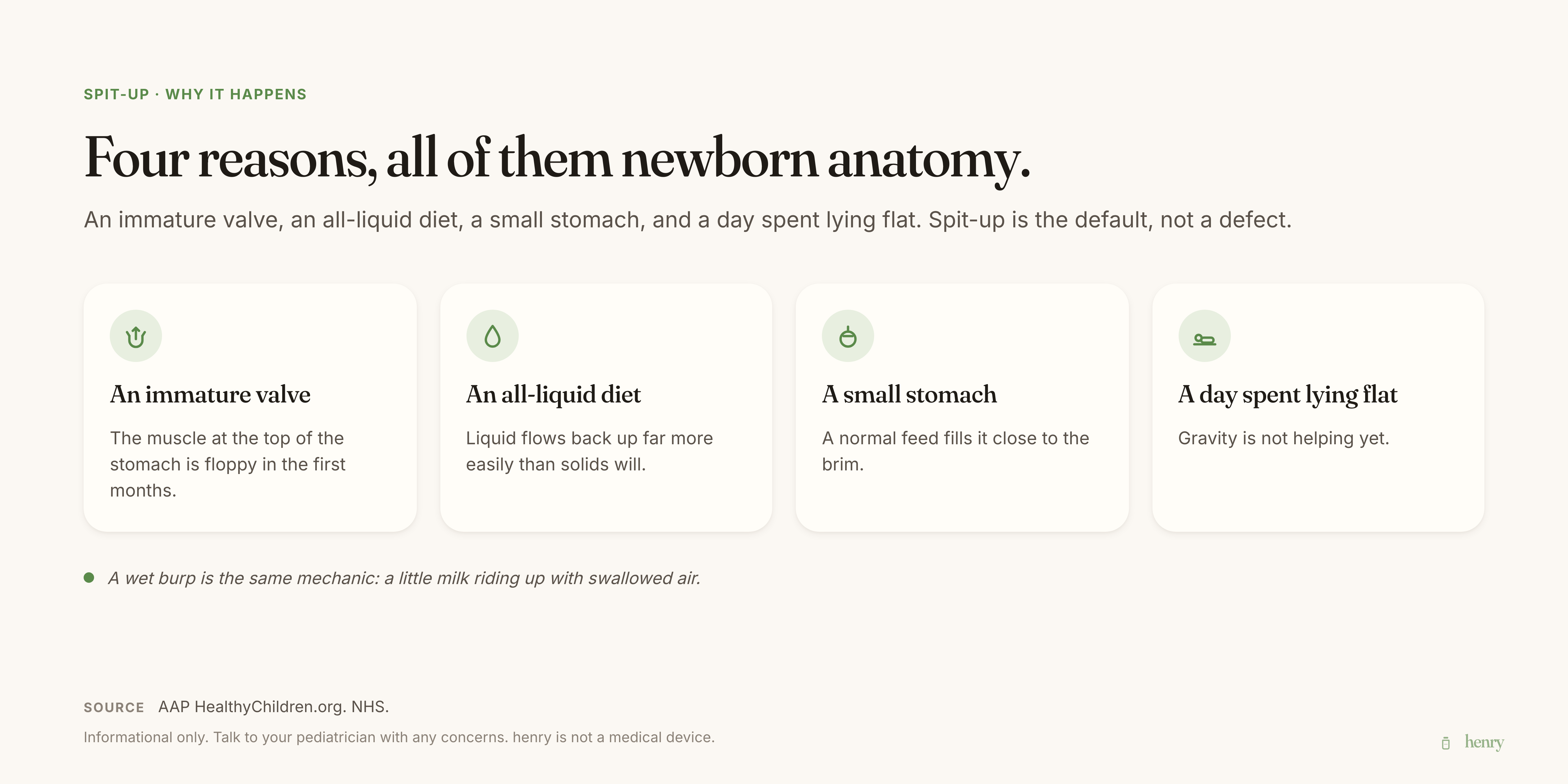
Four things conspire, and every one of them is just newborn anatomy.
The valve at the top of the stomach (the lower esophageal sphincter) is immature and floppy in the first months, so stomach contents slide back up easily. The diet is entirely liquid, which flows back up far more readily than solids. The stomach is small, so a normal feed fills it close to the brim. See How much milk should a newborn eat? for how small those volumes really are. And babies spend most of their day lying flat, which removes gravity from the equation.
Swallowed air adds the final push: a burp on the way up often brings a little milk with it. That is the "wet burp," and it is within range. Burping a newborn: what's normal? covers that mechanic, and the difference between a burp, spit-up, and vomit.
The curve: it gets worse, then it goes away
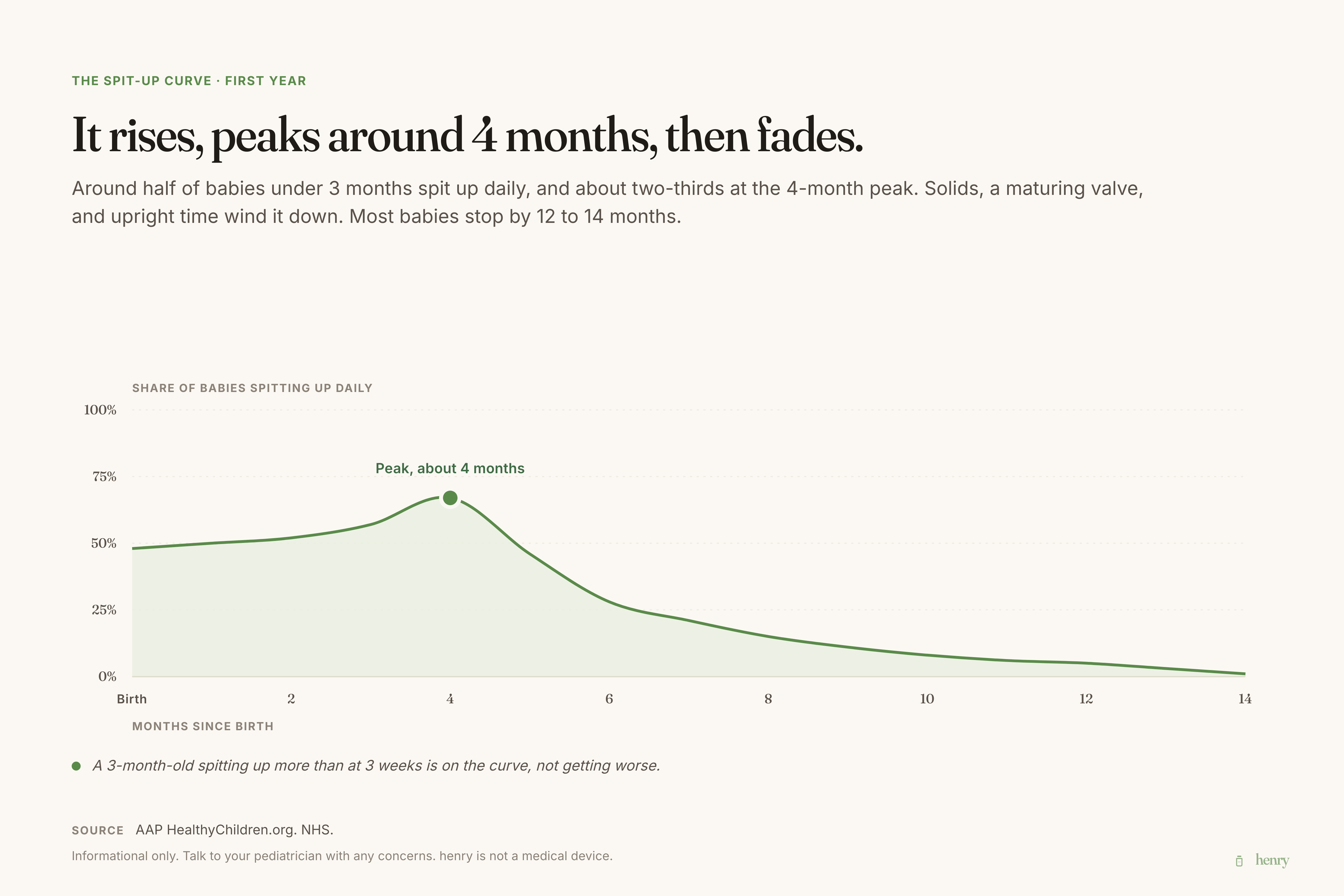
Like crying, spit-up follows a curve that nobody warns you about. It typically increases over the first weeks and peaks around 4 months, when the AAP estimates roughly two-thirds of babies spit up daily. Then three things change it: solids thicken the diet, the valve matures, and the baby starts spending more time upright, sitting and then standing. By 12 months most babies have stopped; the NHS puts the outer edge around 14 months.
So a 3-month-old who spits up more than they did at 3 weeks is not getting worse. They are on the curve.
The happy spitter vs. reflux worth treating
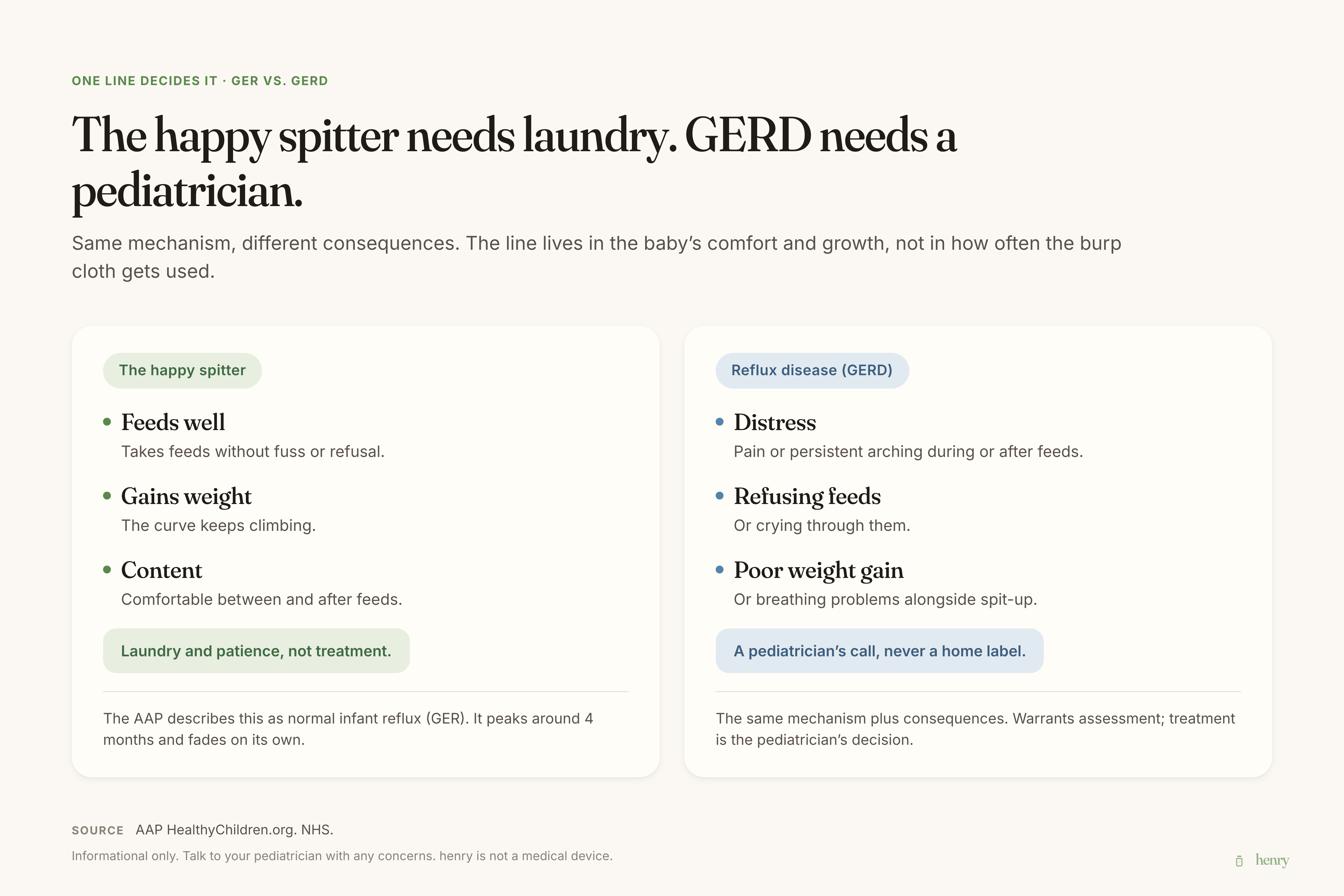
Pediatricians draw one line through all of this, and it is worth knowing because it decides everything.
The happy spitter. A baby who spits up, sometimes a lot, but feeds well, gains weight, and is generally comfortable. This is gastroesophageal reflux (GER), and the AAP describes it as a normal infant condition that needs laundry and patience, not treatment. The volume on your shirt is also misleading: a tablespoon of milk spreads into a stain the size of a dinner plate.
Reflux disease (GERD). The same mechanism plus distress or consequences: pain and persistent arching during or after feeds, refusing feeds, poor weight gain, or breathing problems. This is the version that warrants assessment, and it is the pediatrician's call, never a label to apply at home. The distinction lives in the baby's comfort and growth, not in how often the burp cloth gets used.
If weight is the question, the trend matters more than any single day. See Newborn weight loss after birth: what's normal? for the regain curve and typical gain.
What helps
No remedy stops spit-up. A few habits reduce it, and the AAP and NHS lists agree:
- Upright time after feeds. Hold the baby upright for 20 to 30 minutes after eating. Gravity is the one tool that works.
- Smaller, more frequent feeds. An overfilled small stomach overflows. Same total, more sittings.
- Burp during and after feeds. Less swallowed air means less air coming up with milk in tow.
- Paced bottle feeding. Slower flow, frequent pauses. Less gulping, less air.
- A loose diaper line. Pressure on a full belly squeezes upward.
One thing does not belong on that list: changing how the baby sleeps. The AAP is explicit that babies with reflux still sleep alone, on their backs, on a firm flat surface. Inclined sleepers, wedges, and positioners are not safe and do not help reflux. Holding the baby upright while awake is the safe version of the same idea. The full guidance is in Newborn sleep: what's normal?.
Anti-reflux medication exists, but the AAP notes acid blockers do not help typical infant reflux and are reserved for diagnosed GERD. That decision belongs to your pediatrician, never to the formula aisle.
When to call your pediatrician
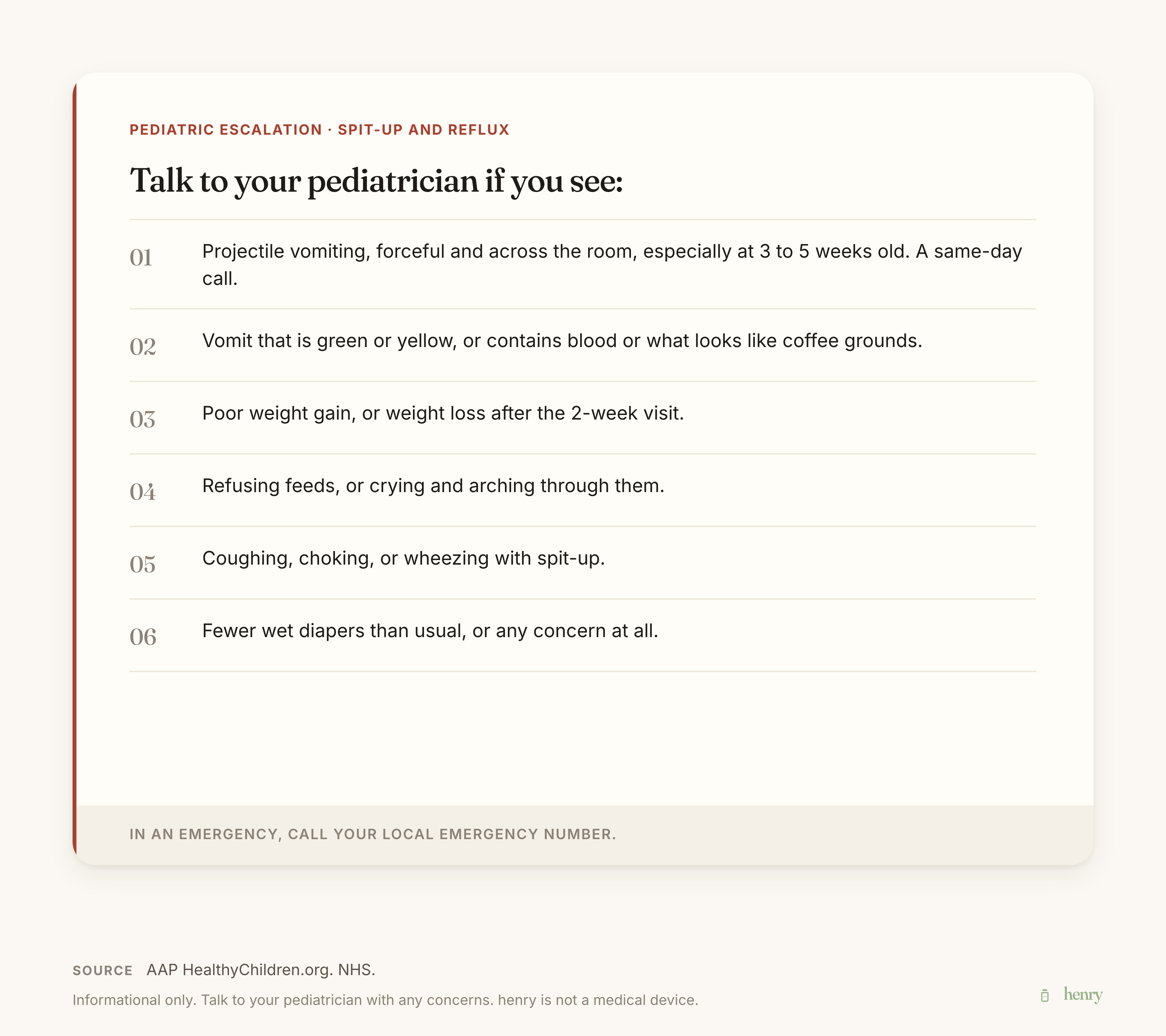
Most spit-up is routine. A few patterns are not.
- Projectile vomiting. Forceful, across-the-room, often after every feed. The AAP describes it as a possible sign of pyloric stenosis, especially in babies 3 to 5 weeks old. Call the same day.
- Vomit that is green, yellow, or contains blood or what looks like coffee grounds. Always a call. The NHS treats green or yellow vomit as a possible bowel-obstruction signal.
- Poor weight gain, or weight loss after the 2-week visit. Spit-up plus a flat weight curve changes the picture. Call.
- Refusing feeds, or crying and arching through them. Persistent feeding distress is the GERD signal that warrants assessment.
- Coughing, choking, gagging, or wheezing with spit-up. Reflux that interferes with breathing needs to be seen.
- Fewer wet diapers than usual, or signs of dehydration. A baby losing more than they keep down needs same-day attention.
- Any concern at all. Pediatricians field spit-up questions every single day. Yours will not be the strangest.
In an emergency, call your local emergency number.
How henry helps
henry logs feeds with a volume, a timestamp, and a note, and the note field is where spit-up lives: "spit up after," "wet burp," "soaked the cloth." Logged on the feed, the pattern becomes visible across the week: whether it follows the bigger bottles, whether the evening feeds come back up more, whether it is actually increasing or just feels that way at 2pm on the fourth outfit.
The other half is the weigh-in log. Spit-up is benign exactly as long as the weight keeps climbing, and henry plots your baby's weigh-ins against the WHO curve so you and your pediatrician are looking at the trend, not a guess. Spit-up volume is unknowable. Weight is a number.
henry is free on the App Store: henrytheapp.com.
henry shows you ranges from the American Academy of Pediatrics and the NHS with their sources cited. We never tell you a number is "good" or "bad," only whether it falls inside or outside what's typical for a baby of that age. If you have any concern about your baby's feeding, spit-up, weight, or health, talk to your pediatrician. In an emergency, call your local emergency number. henry is not a medical device and does not provide medical advice, a diagnosis, or a treatment plan.