By henry · June 12, 2026
Starting solids: what's normal?
The short answer: around 6 months, and not before 4. The AAP and WHO both put the starting point at about 6 months, when babies typically show a set of readiness signs that matter more than the calendar. The first months of solids are practice, not nutrition strategy: milk (breast milk or formula) stays the main meal through the first year, and most of the banana ends up on the bib. That is the plan working.
henry is a tracking tool, not a diagnostic device. The ranges in this article come from publicly available pediatric guidelines (AAP, WHO, NHS, CDC). Every baby is different. Always talk to your pediatrician with any concerns about your baby's feeding, growth, or allergies.
The long stare at your toast
It starts a few weeks before the first spoon. You are eating breakfast and you notice the baby tracking your toast from plate to mouth like a stadium crowd following a ball. They lean. They open their mouth when your fork goes up. Last week they grabbed your banana and looked genuinely betrayed when you took it back.
That stare is data. Somewhere around the half-year mark, most babies start announcing they are ready, and the announcement looks exactly like this.
Ready when they're ready, around 6 months
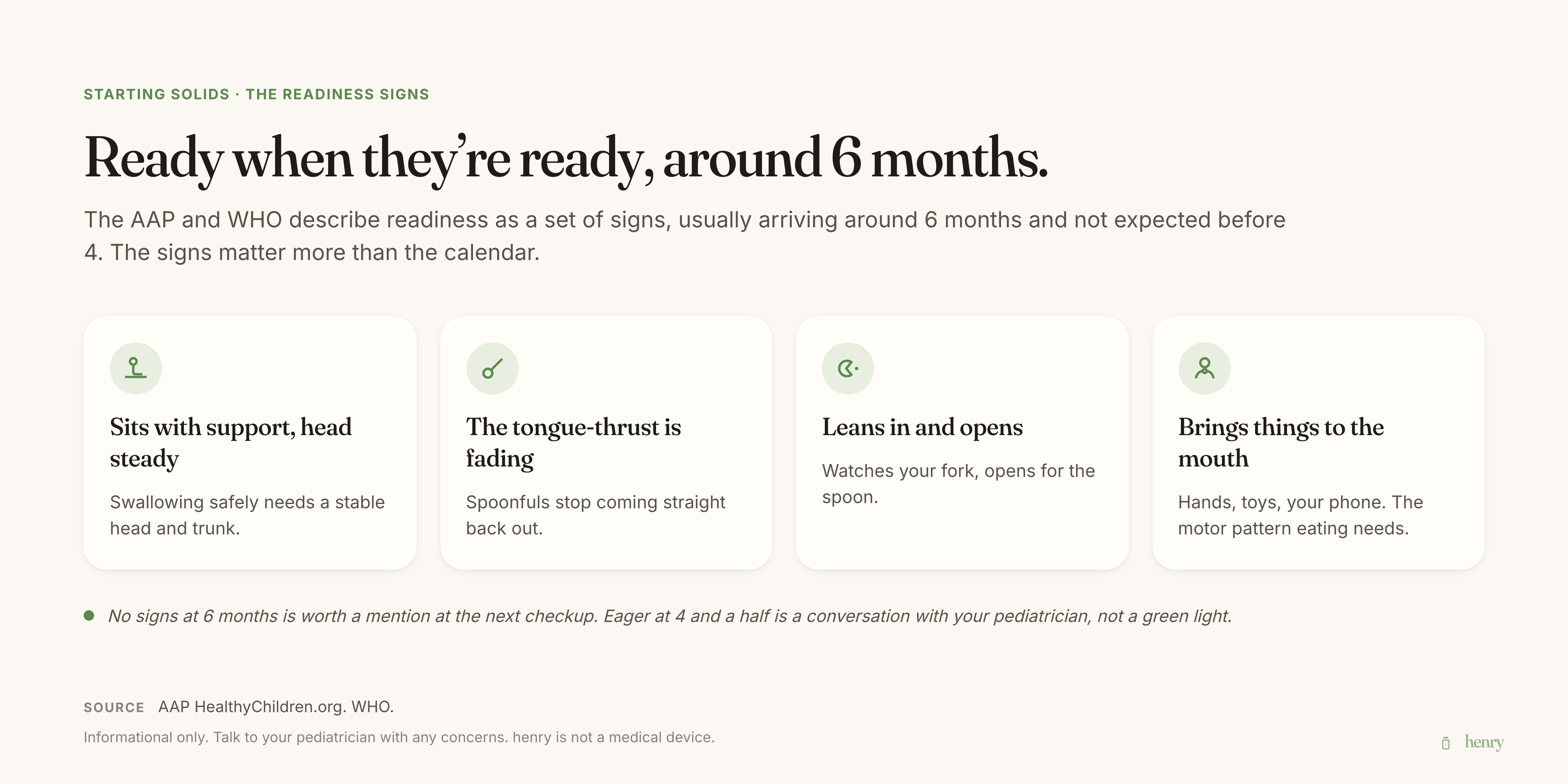
The AAP and WHO describe readiness as a set of signs, usually arriving around 6 months and not expected before 4:
- Sits with support, head steady. Swallowing solids safely needs a stable head and trunk.
- The tongue-thrust reflex has faded. Young infants push solids back out by reflex. When the spoonful stops coming straight back, the reflex is going.
- Leans in and opens. Interest in your food, mouth opening toward the spoon, the toast stare.
- Brings things to the mouth. Hands, toys, your phone. The motor pattern eating needs.
A baby who shows none of these at 6 months is worth mentioning at the next checkup, not a crisis. A baby who seems eager at 4 and a half months is a conversation with your pediatrician, not a green light.
What to offer first
There is no required first food and no required order (AAP). Two things do matter.
Iron. A baby's iron stores from birth run down around 6 months, which is part of why the timing is what it is. The AAP and CDC point to iron-rich first foods: iron-fortified infant cereal, puréed or soft-cooked meat, beans, lentils.
Allergens, earlier rather than later. This guidance flipped a decade ago and many grandparents have not gotten the memo. The AAP and NIAID now describe early introduction of peanut and egg, around 6 months and once a few other foods have gone well, as protective against developing the allergy, not risky. Introduce one new allergen at a time, at home, earlier in the day, and watch. For a baby with severe eczema or an existing food allergy, the plan comes from your pediatrician first.
Purées on a spoon, soft finger foods the baby feeds themselves (often called baby-led weaning), or a mix: the NHS treats all of these as fine, and there is no strong evidence one path beats another. Offer new foods one at a time with a few days between them, so if something disagrees with the baby you know which something it was.
Milk is still the main meal
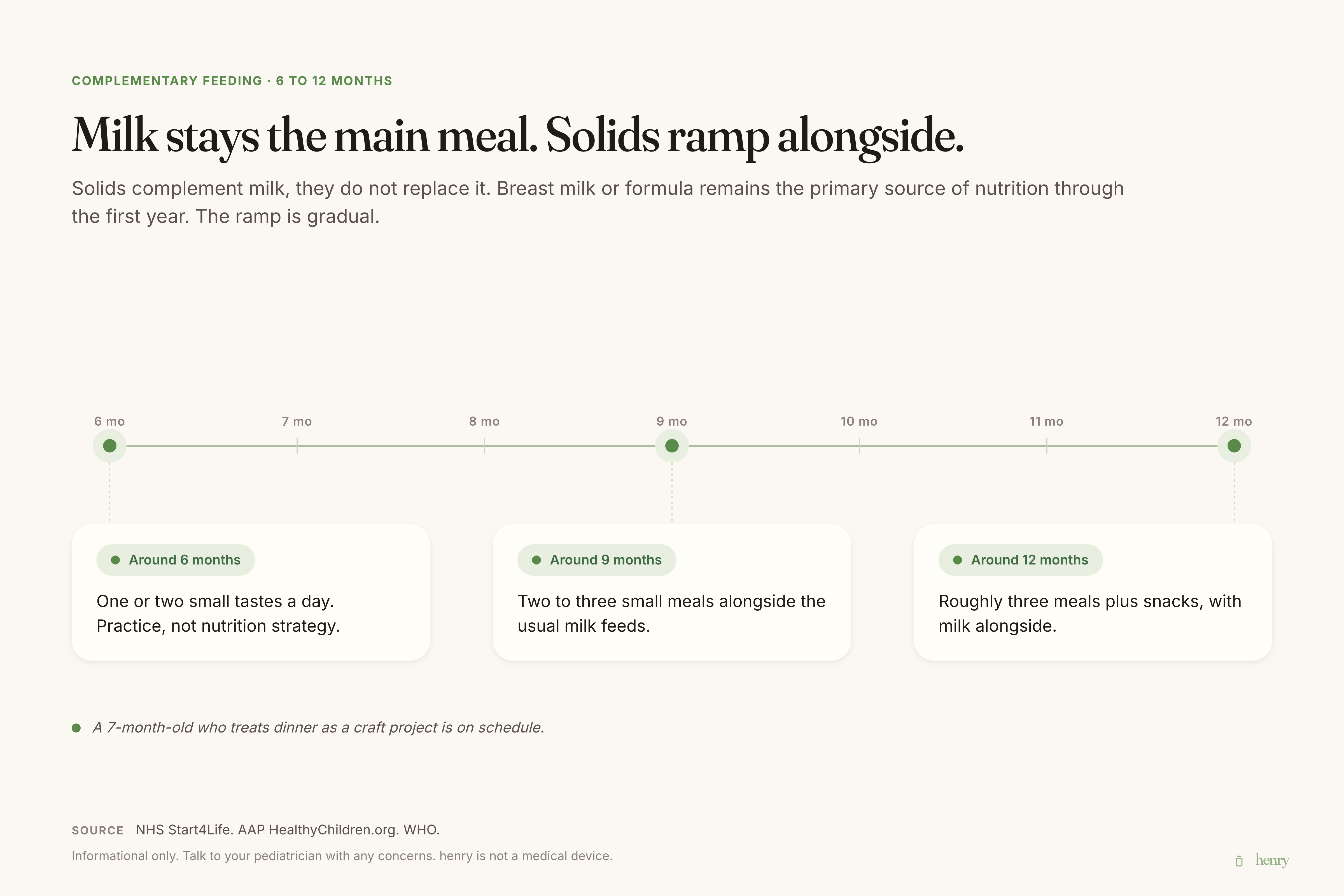
The phrase pediatricians use is "complementary feeding," and the word is doing real work: solids complement milk, they do not replace it. Through the first year, breast milk or formula remains the primary source of nutrition (AAP, WHO). The ramp is gradual: around 6 months it is one or two small tastes a day, around 9 months two to three small meals alongside the usual milk, and by 12 months roughly three meals plus snacks with milk alongside (NHS).
So the milk feeds do not fall off a cliff the week solids start, and a 7-month-old who treats dinner as a craft project is on schedule. See How much milk should a newborn eat? for where the volumes started.
The not-yet list
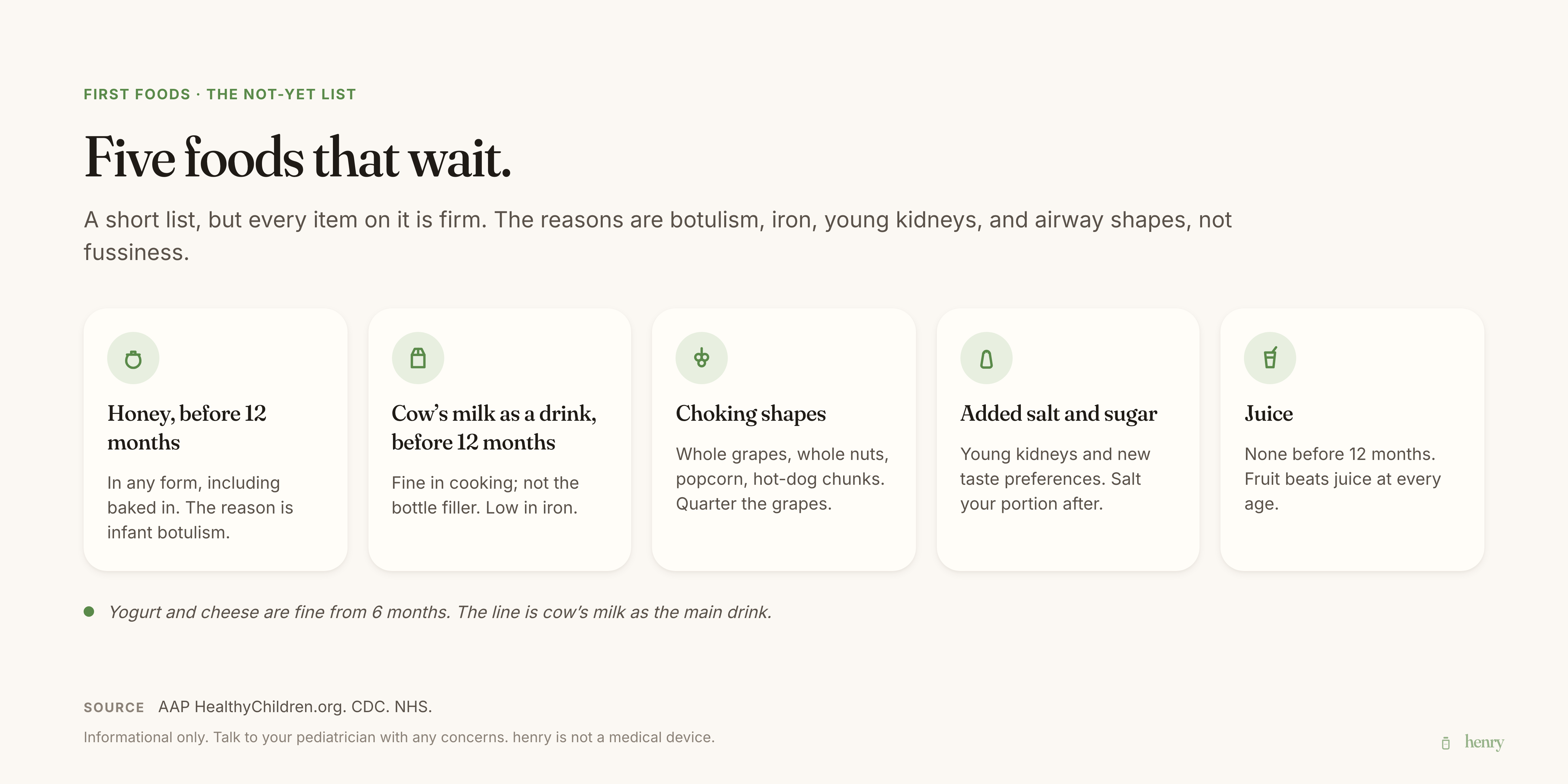
A short list, but every item on it is firm.
- Honey, before 12 months. The AAP's hard line, in any form, including baked into things. The reason is infant botulism.
- Cow's milk as a main drink, before 12 months. Fine in cooking and in small amounts in food; not as the bottle or cup filler. It is low in iron and hard on young kidneys (AAP). Yogurt and cheese are fine from 6 months.
- Choking shapes. Whole grapes, whole nuts, popcorn, chunks of hot dog, hard raw vegetables, globs of nut butter. Grapes get quartered lengthwise; nut butters get thinned or spread. The CDC keeps a full list.
- Added salt and sugar. Young kidneys and new taste preferences, respectively (NHS). The family meal can be the baby's meal; just salt your portion after.
- Juice. The AAP recommends none before 12 months. Fruit beats juice at every age.
Gagging is loud. Choking is silent.
This is the distinction that lets parents breathe at the dinner table. Gagging is a noisy, red-faced, sputtering false alarm; it is the baby's airway-protection reflex working as designed, sited far forward in infants exactly so they can learn to eat. It looks dramatic and resolves on its own. Choking is the opposite: silent, no cry, no cough, often with a panicked look. That is the emergency. Many parents take an infant first-aid course around this milestone, and pediatricians tend to encourage it.
One related note: the diaper changes. Color, smell, and texture all shift within days of the first meals, sometimes alarmingly. Most of it is within range; How many wet and dirty diapers should a newborn have? covers the colors that are not.
When to call your pediatrician
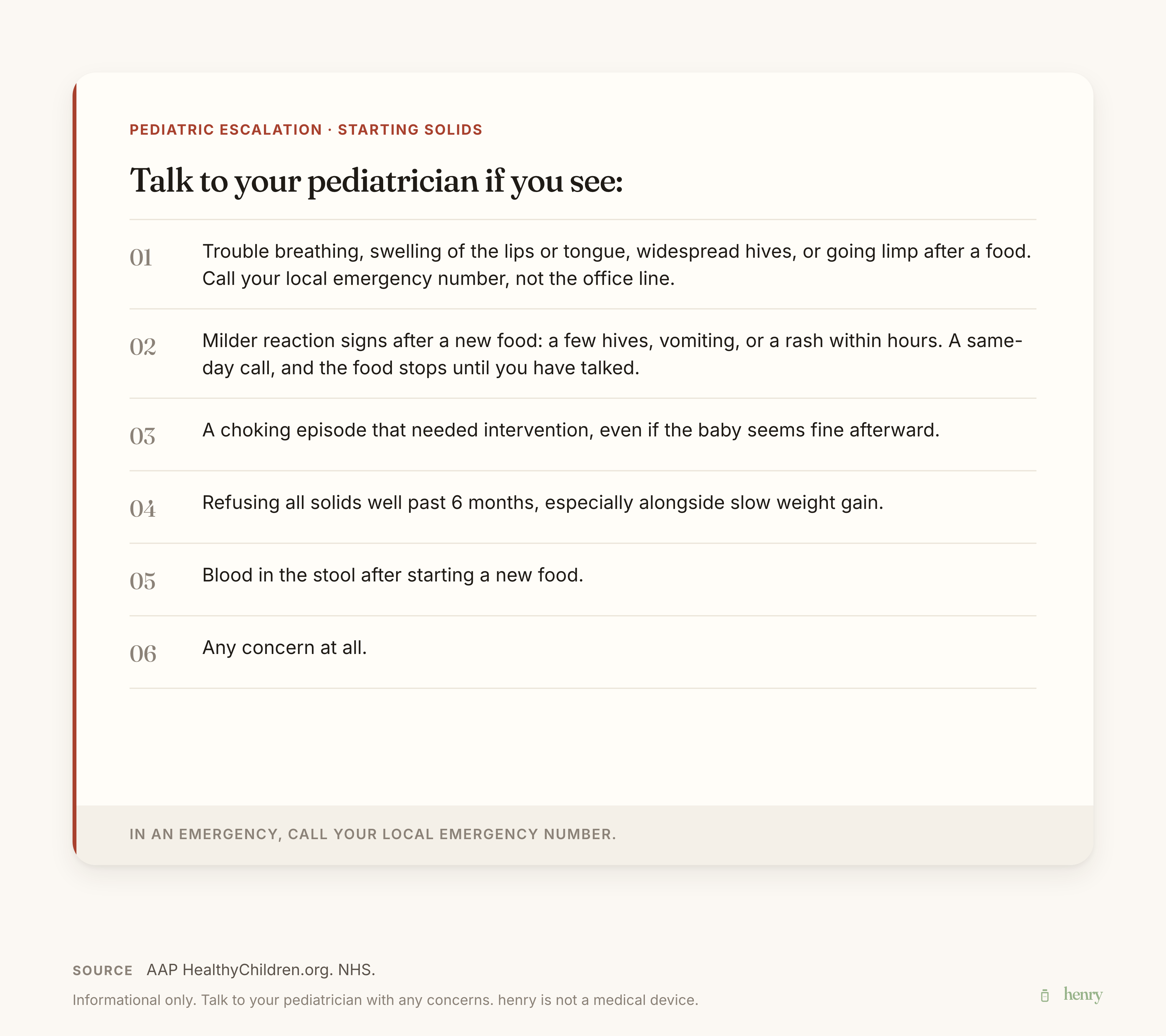
Most first-foods drama is mess, not medicine. A few things are different.
- Trouble breathing, swelling of the lips or tongue, widespread hives, or going limp after a food. This is the emergency profile of an allergic reaction. Call your local emergency number, not the office line.
- Milder reaction signs after a new food. A few hives around the mouth, vomiting, or a rash within minutes to a couple of hours. Same-day call, and the food stops until you have talked.
- A choking episode that needed intervention. Even if the baby seems fine afterward, call.
- Refusing all solids well past 6 months, especially alongside slow weight gain. Worth a visit, not a panic.
- Blood in the stool after starting a new food. Sometimes a sign of a food intolerance; always worth a call.
- Any concern at all. First-foods questions are half of every 6-month visit.
In an emergency, call your local emergency number.
How henry helps
This is the one article in this series where henry was built for exactly the thing. henry has a solids tracker: pick the food, log roughly how much went in (a taste, a few bites, half, finished), and record the reaction. The reaction is required, on purpose, and there are only three: loved it, unsure, not yet.
That little log turns out to be the whole game. The one-food-at-a-time, wait-a-few-days rhythm lives in the timestamps. The "which something was it" question after a rash has an answer, with dates. And the diary of foods tried, with reactions, is precisely the list your pediatrician asks for at the next visit. "Not yet" is also a kinder label than "hates broccoli," because at this age tastes change weekly, and last month's betrayal is next month's favorite.
The solids tile is opt-in: add it from the Today screen via "Add or restore" when you get there.
henry is free on the App Store: henrytheapp.com.
henry shows you ranges from the American Academy of Pediatrics, the World Health Organization, the NHS, and the CDC with their sources cited. We never tell you a number is "good" or "bad," only whether it falls inside or outside what's typical for a baby of that age. If you have any concern about your baby's feeding, growth, allergies, or health, talk to your pediatrician. In an emergency, call your local emergency number. henry is not a medical device and does not provide medical advice, a diagnosis, or a treatment plan.