By henry · July 7, 2026
Teething: what's normal?
The short answer: the first tooth usually shows up around 6 months, and the normal range is enormous; a few babies get one at 4 months, plenty are still gummy at their first birthday, and both are fine. Teething causes drool, sore gums, and a baby who chews everything within reach. What it does not cause, despite what everyone will tell you, is fever. A temperature of 38°C / 100.4°F or higher is never "just teething."
henry is a tracking tool, not a diagnostic device. The guidance in this article comes from publicly available pediatric sources (AAP, NHS, ADA). Every baby is different. Always talk to your pediatrician with any concerns about your baby's teeth, gums, or health.
The most accused suspect in the house
From about month three, teething gets blamed for everything. The bad nap: teething. The fussy evening: teething. The blowout, the feed strike, the sixth wake-up: teething, teething, teething. It is the perfect suspect, permanently in the neighborhood and unable to defend itself.
The truth is duller. Teething bothers most babies less than the folklore says, for shorter windows than the folklore says, and months later than the drool suggests. That fountain of drool at 3 months is usually just the salivary glands coming online; the first tooth is, on average, still a season away.
When teeth actually arrive
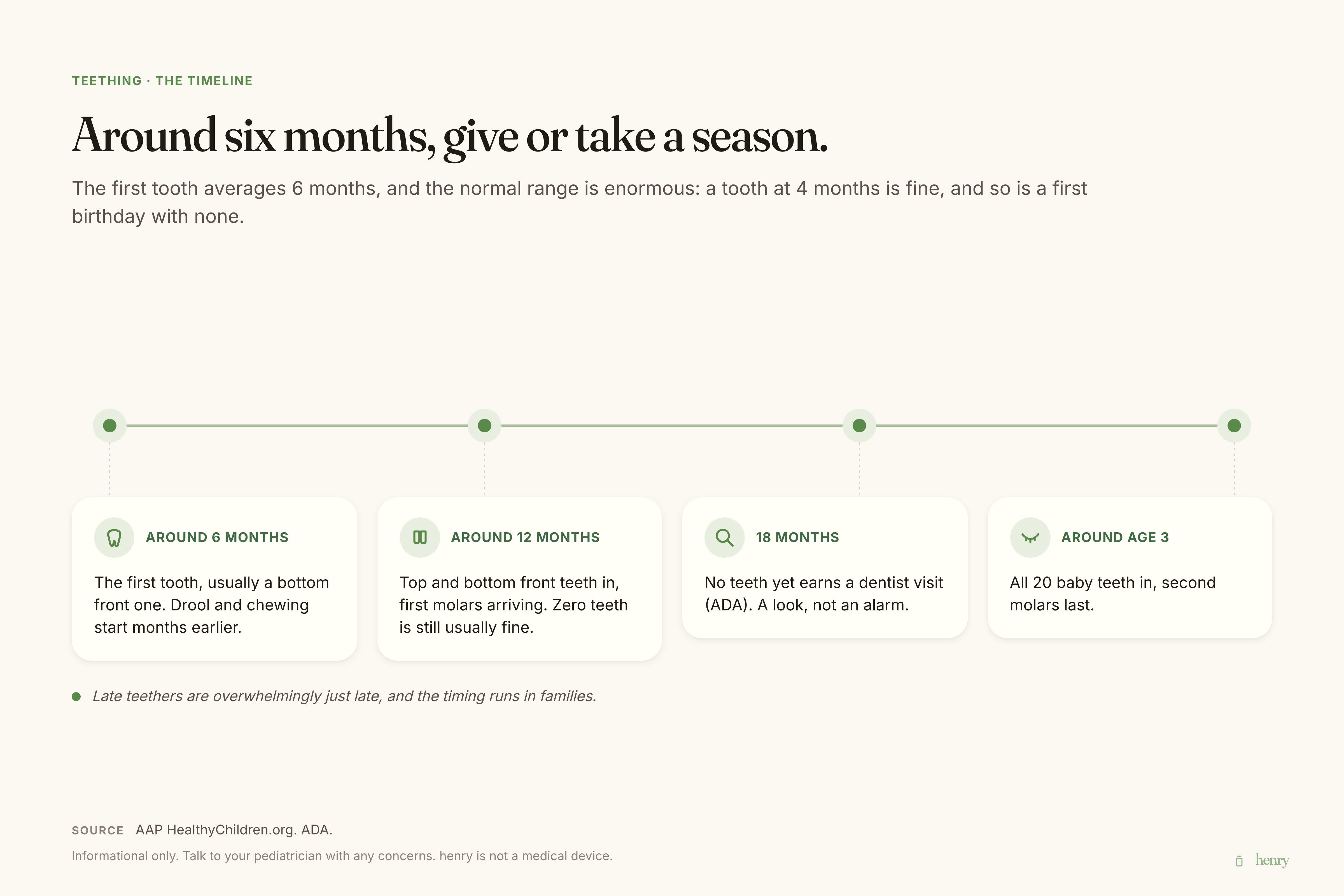
The average first tooth is a bottom front one (a central incisor) at around 6 months. The usual order after that: top front teeth, the ones beside them, first molars around the first birthday, canines, and second molars somewhere in the third year. The full set of 20 lands by around age 3.
The range around that average is wide and boring. A tooth at 4 months is early and fine. A first birthday with zero teeth is usually fine too; late teethers are overwhelmingly just late, and the timing runs in families. The one marker worth acting on: no teeth at all by about 18 months earns a dentist visit (ADA), not because something is wrong, but because that is the point where someone should look.
What teething causes, and what it does not
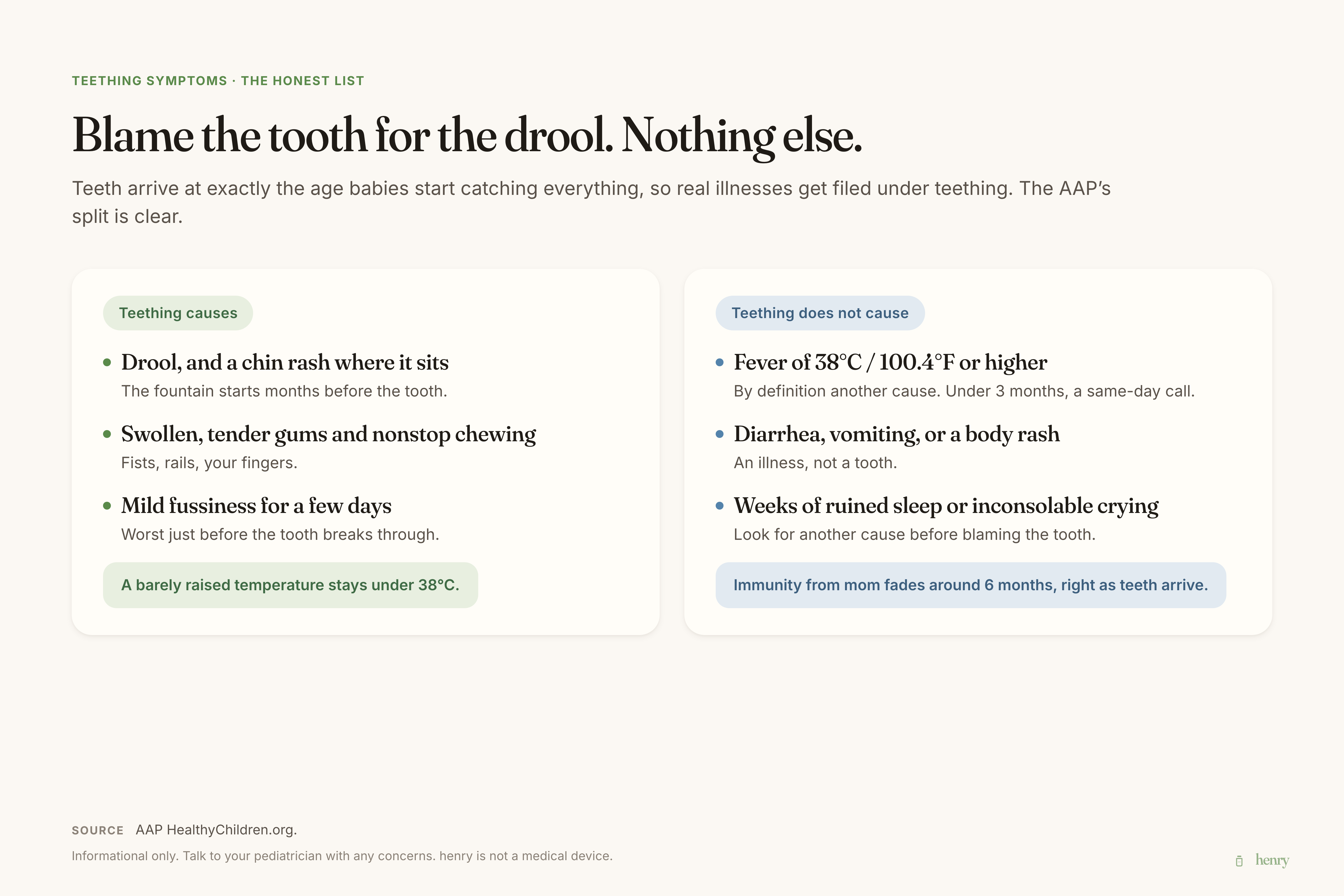
What teething actually causes (AAP): drooling, a rash on the chin where the drool sits, swollen or tender gums, a baby who gnaws on fists, rails, and your fingers, some extra fussiness in the days before a tooth breaks through, and sometimes a barely raised temperature that stays under 38°C.
What it does not cause: fever at or above 38°C / 100.4°F, diarrhea, vomiting, a body rash, prolonged inconsolable crying, or weeks of ruined sleep. The AAP is unambiguous on this, and it matters because of the timing: teeth arrive at exactly the age babies start catching everything; the immunity from mom fades around 6 months, right as daycare germs show up. A fever that gets filed under "just teething" is a real illness going uninvestigated. If something is wrong beyond drool and gum-rubbing, look for another cause before blaming the tooth.
What helps, and what to skip
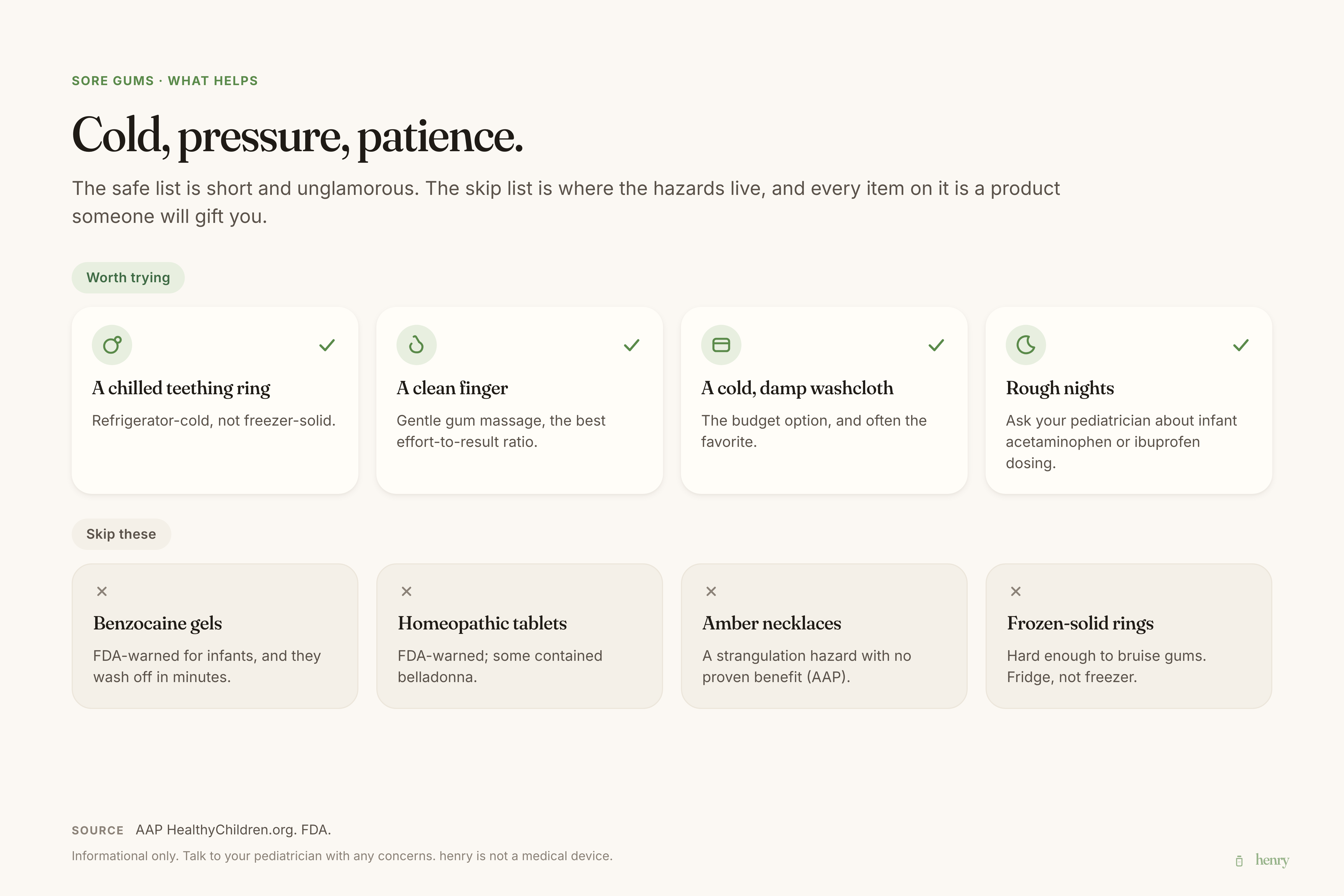
The safe list is short and unglamorous:
- A chilled teething ring. Refrigerator-cold, not freezer-solid; a frozen ring is hard enough to bruise gums.
- A clean finger. Gentle gum massage, the remedy with the best effort-to-result ratio on the list.
- A cold, damp washcloth to chew. The budget option, and often the favorite.
- Drool management. Wipe the chin, and a plain barrier cream keeps the drool rash down.
- For a genuinely rough night, ask your pediatrician about an age-appropriate dose of infant acetaminophen or ibuprofen. Ask first; the answer depends on age and weight.
The skip list is where the real hazards live, and every item on it is a product someone will gift you:
- Benzocaine teething gels. The FDA warns against them for infants; the numbing agent can cause a rare but serious blood condition, and the gel washes off the gums in minutes anyway.
- Homeopathic teething tablets. The FDA has warned about these too, after some were found to contain inconsistent amounts of belladonna.
- Amber teething necklaces. A strangulation and choking hazard with no proven benefit; the AAP says plainly not to use them.
- Anything alcoholic on the gums. The whiskey-on-the-gums trick is a folk remedy for the adult, not the baby.
Teeth mean toothcare starts now
The first tooth is not just a milestone; it is a deadline. From the day it appears: a soft infant toothbrush twice a day with a smear of fluoride toothpaste the size of a grain of rice (AAP, ADA). Before teeth, a damp cloth over the gums after feeds does the job. Two habits to set early because they are miserable to unset later: no bottle in bed (milk pooling against new teeth is how early cavities happen), and a first dental visit by the first birthday.
A rough patch of teething fussiness can also drag appetite down for a few days, which reads alarmingly in a feed log and resolves on its own; Growth spurts: what's normal? covers the same pattern from the other direction. And for the evenings when the fussiness has no visible cause at all, tooth or otherwise, Newborn crying: what's normal? is the article to reread.
When to call your pediatrician
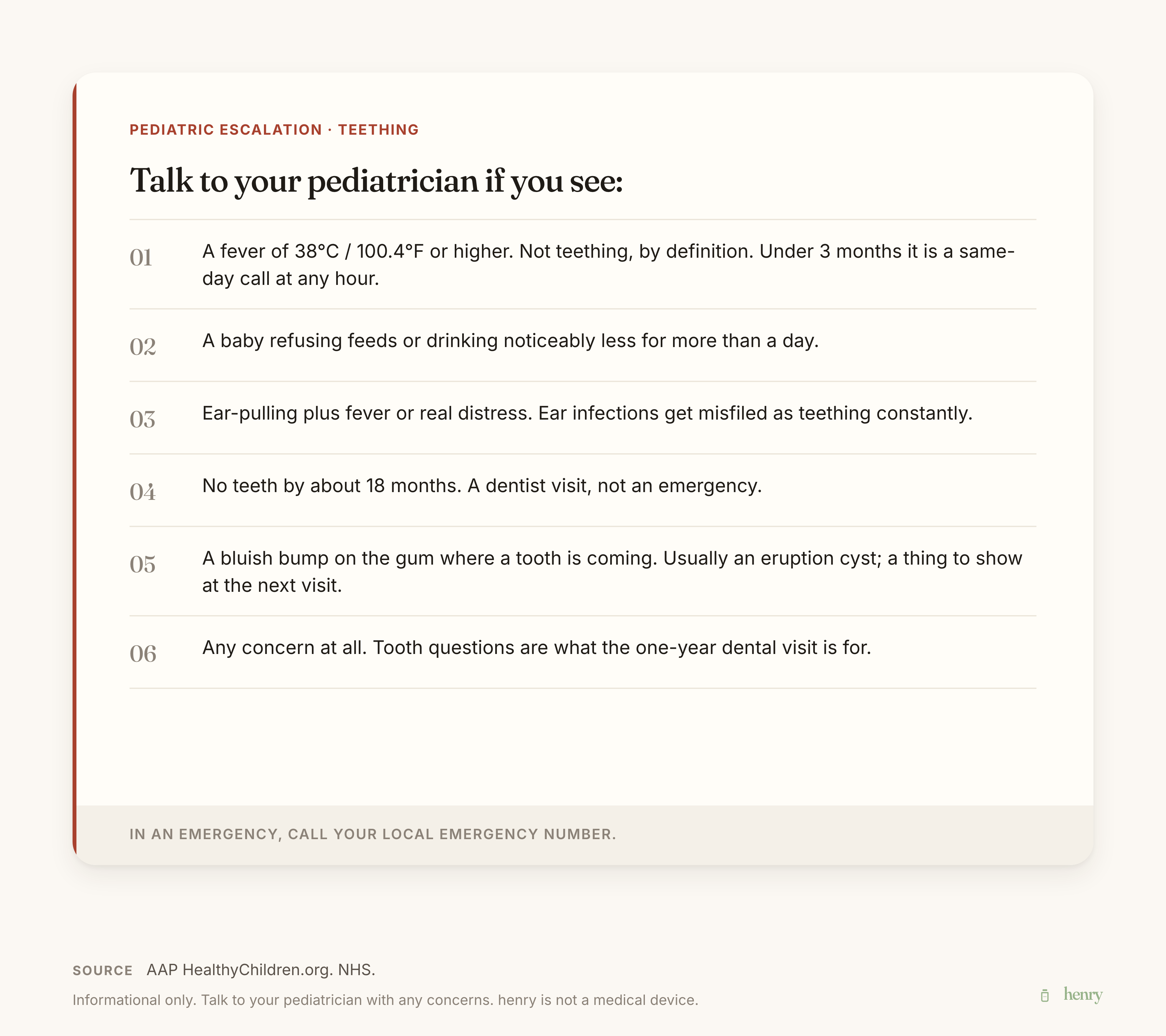
Teething itself is not a medical event. These are:
- A fever of 38°C / 100.4°F or higher. Not teething, by definition. Under 3 months it is a same-day call at any hour; over 3 months, treat it as the illness it is.
- A baby refusing feeds or drinking noticeably less for more than a day. Sore gums make babies fussy at the breast or bottle, not unable to eat.
- Ear-pulling plus fever or real distress. Ear infections get misfiled as teething constantly; the treatment is different.
- No teeth by about 18 months. A dentist visit, not an emergency.
- A bluish bump on the gum where a tooth is coming. Usually an eruption cyst that resolves when the tooth breaks through; a thing to show at the next visit.
- Any concern at all. Tooth questions are what the one-year dental visit is for.
In an emergency, call your local emergency number.
How henry helps
henry does not have a tooth chart. The baby book wants that job, and the baby book should have it; a first tooth is a photograph, not a data point.
Where the log earns its keep is the accusation phase. When a rough week gets blamed on teething, the feed history is the honest witness: the dip that recovered in three days supports the tooth theory, and the dip that keeps sliding says to look elsewhere. henry keeps the numbers so the tooth gets a fair trial. The verdict stays yours, and the molars, as always, remain innocent until proven erupted.
henry is free on the App Store: henrytheapp.com.
henry shows you ranges from the American Academy of Pediatrics, the World Health Organization, and the NHS with their sources cited. We never tell you a number is "good" or "bad," only whether it falls inside or outside what's typical for a baby of that age. If you have any concern about your baby's teeth, feeding, or health, talk to your pediatrician. In an emergency, call your local emergency number. henry is not a medical device and does not provide medical advice, a diagnosis, or a treatment plan.